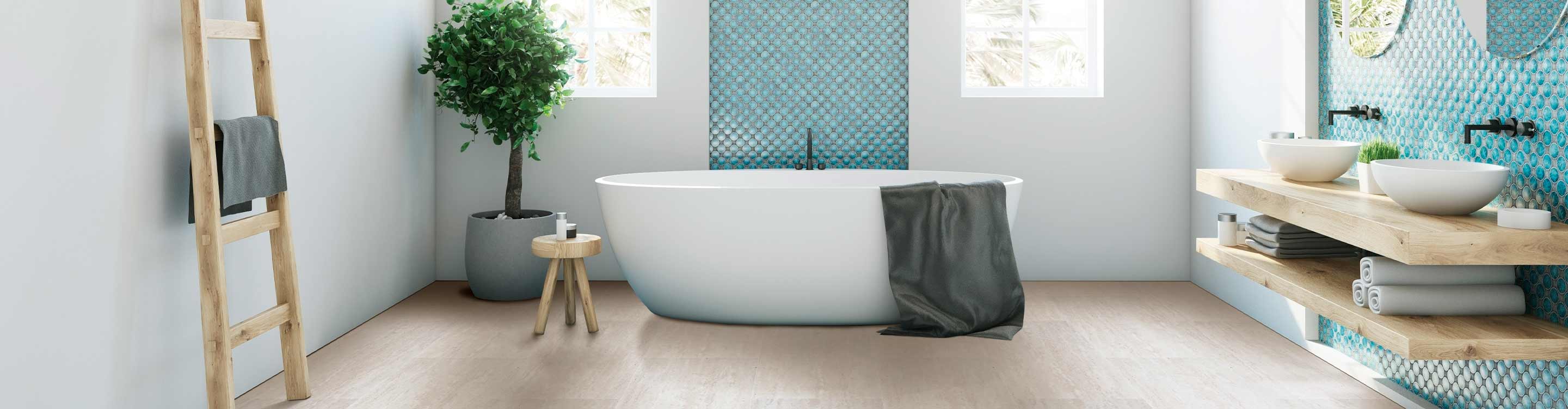
For most rooms, luxury vinyl plank (LVP) is the best overall waterproof flooring choice: fully waterproof, durable, comfortable underfoot, and available in realistic wood and stone looks. Porcelain and ceramic tile are the strongest picks for bathrooms and kitchens where a tile aesthetic is preferred. Waterproof laminate, including options carrying our H2O label, is a strong option for kitchens and active households. Here is what to know before you choose.
Luxury Vinyl Plank (LVP) is a top choice for homeowners who want a stylish, versatile floor that can handle real life. It brings warmth and visual appeal to any space while offering the moisture protection that kitchens, bathrooms, and high-traffic areas demand. Whether you are updating a single room or rethinking your whole home, LVP delivers the durability and design flexibility to get it right.
LVP is built to handle spills, splashes, and the kind of moisture that comes with everyday living. Its waterproof construction protects against accidents without compromising on style, so your floors stay beautiful and resilient year after year. It is a practical choice for both homes and businesses that want lasting performance without sacrificing aesthetics.
Tile flooring continues to be a favored option among homeowners and designers alike for its timeless elegance, long-lasting durability, and easy installation. Not only does it offer a sleek and sophisticated look to any room, but its waterproof properties also make it an ideal choice for a variety of applications beyond just floors.
The versatility of tile extends to walls, countertops, and even outdoor spaces, allowing for a cohesive aesthetic throughout the home.
Whether in the kitchen, bathroom, or living areas, or access areas such as hallways, tile flooring provides a practical yet stylish solution that stands the test of time. For kitchen tile or bathroom tile, choosing a style that is slip- and water-resistant is the best option to maintain the beauty and safety of some of your most functional home spaces.
When it comes to living areas, tile can be a beautiful option but you may want to consider area rugs to soften and warm spaces where you are likely to be relaxing.
From ceramic and porcelain tile to stone and vinyl tile, there are a variety of beautiful tile options to choose from to suit your home while still benefitting from waterproof properties.
To guarantee the preservation of a tile's waterproof features, it's crucial to apply proper grout sealing techniques. This pivotal step acts as a barrier, effectively preventing moisture penetration that could compromise the integrity of the flooring. By meticulously sealing the grout, you not only maintain the tile's immaculate condition but also extend the lifespan of your flooring, ensuring it remains in a pristine state for years to come.
For individuals in search of an economical flooring solution, laminate floors present an attractive option that combines practical water resistance with durability, all without sacrificing quality. These floors are particularly suited for areas that see a lot of foot traffic, such as living rooms, kitchens, and hallways, offering the ability to withstand wear and tear with remarkable resilience. Not only do they provide a cost-effective alternative to more expensive materials, but their design versatility means they can fit a wide range of aesthetic preferences, making them an ideal choice for budget-conscious homeowners looking to maintain style and functionality.
Laminate flooring stands out due to its core construction technology, which is ingeniously designed to offer reliable moisture resistance. This innovative feature positions laminate as an exceptional contender in the market of water-resistant materials, providing homeowners and builders with a reliable and durable flooring option that excels in environments prone to moisture.
For kitchens and moisture-prone areas, look for laminate carrying our H2O label, which features a water-repellent core and sealed locking joints for stronger moisture protection. Browse our laminate flooring guide to explore options.
The undeniable charm of real wood has always held a prestigious place in interior design, and engineered hardwood has successfully extended this natural beauty into the domain of waterproof flooring options. With its sophisticated appearance, engineered hardwood offers an elegant choice that seamlessly combines style with functionality. Unlike traditional wood floors, it stands strong against spills or splashes, making it an ideal solution for areas prone to moisture without sacrificing the timeless appeal of wood.
The secret to the long-lasting beauty of the wood lies in the meticulously engineered core technologies. These advanced technologies create a formidable barrier that effectively protects against moisture, ensuring that the aesthetic appeal and structural integrity of the wood are preserved through the years. This innovative approach guarantees that the wood maintains its natural beauty and strength, even in the face of environmental challenges.
The basement, with its unique set of challenges, primarily revolves around moisture concerns. This makes selecting the right waterproof flooring not just an option but a necessity for ensuring the longevity and durability of below-grade spaces. By choosing appropriate flooring, homeowners can prevent water damage and mold growth, ensuring their basement remains a functional and comfortable part of their home for years to come.
Incorporating a vapor barrier beneath your basement flooring is a smart and strategic decision aimed at shielding your investment from moisture damage. By doing so, you ensure that the flooring material you've selected maintains its integrity and appearance over time, preventing warping, mold, and other moisture-related issues that can compromise both the aesthetics and structural health of your basement.
To ensure your flooring retains its water resistance, continuous care is crucial. Regular cleaning does more than just keep your floors looking good; it plays a key role in maintaining their functionality as well. By diligently removing dirt and spills, you protect the material from damage and wear, extending its lifespan and preserving its water-resistant properties. This not only enhances the aesthetic appeal of your space but also safeguards your investment in quality flooring.
It's important to understand that various types of flooring react differently to seasonal changes in humidity, expanding in the summer and contracting in the winter. This natural response can affect the longevity and appearance of your flooring. To ensure your floors remain in top condition, it's crucial to adapt your maintenance strategies to accommodate these changing conditions. This might include regulating indoor humidity levels, using appropriate cleaning methods, and scheduling regular inspections to identify any issues early on.
Every home has different needs, and the best flooring choice is the one that works for yours. As your trusted flooring partner, our experts are ready to help you think through your options and find a floor that fits your space and your life. Reach out today for a free estimate and find the perfect floor for your home.
Choosing the best waterproof flooring often comes down to the specific room. Moisture levels, subfloor conditions, and how the space gets used all point toward different answers.
LVP is the most practical choice for kitchens. It handles spills around the sink, humidity from cooking, and dishwasher leaks without concern, and it installs over most existing subfloors. Tile is equally waterproof and a strong option for kitchens where a stone or ceramic look is the goal. Waterproof laminate carrying our H2O label is also a solid kitchen option, combining the look of wood with a sealed core that resists moisture at the seams. Standard laminate is the one format to avoid near water sources. Browse kitchen tile flooring options to explore tile choices for your kitchen.
Tile and luxury vinyl plank are both reliable choices for full bathrooms. Tile is the traditional pick and handles constant humidity and water exposure with no limitations, provided grout lines are properly sealed. LVP is warmer and softer underfoot than tile and installs faster, making it a strong alternative in bathrooms where comfort is a priority. Waterproof laminate can work in bathrooms with proper installation, but tile and LVP carry less installation risk for full bathrooms with regular water exposure. Browse bathroom tile flooring options for tile ideas.
LVP is the standard recommendation for basements. Concrete subfloors below grade retain moisture and humidity in ways that are difficult to fully control, and LVP's fully waterproof construction handles that environment reliably. A vapor barrier beneath the flooring is essential regardless of which waterproof material you choose. Engineered hardwood can work in basements with controlled moisture levels but carries more risk than LVP. Standard laminate and solid hardwood are poor choices below grade. Browse vinyl flooring for basements to see LVP options suited for below-grade installation.
LVP is the practical default for laundry rooms and mudrooms. Both spaces see regular tracked-in moisture, occasional spills, and humidity from appliances. The fully waterproof construction and easy-clean surface make LVP the lowest-maintenance choice for these high-use, high-moisture utility spaces.
The terms waterproof and water-resistant are often used interchangeably in flooring, but they describe meaningfully different levels of protection.
Waterproof flooring will not absorb water or be damaged by sustained moisture exposure. LVP and porcelain and ceramic tile are fully waterproof materials. The plank or tile itself will not swell, buckle, or degrade from water contact. For a floor to perform as a true waterproof system, the backing, seam sealing, and installation method all need to be correct as well.
Water-resistant flooring resists moisture for a limited time and in limited amounts. Surface spills that are wiped up promptly are generally manageable, but sustained exposure or water that works into the seams can cause damage over time. Most laminate and engineered hardwood are water-resistant rather than waterproof. Waterproof laminate options carrying our H2O label are the exception: the sealed core and locking joints prevent moisture from penetrating even with longer exposure.
The practical decision rule is straightforward. Bathrooms, laundry rooms, basements, and any space that sees regular water exposure require fully waterproof flooring. Living rooms, bedrooms, and dry-condition spaces can use water-resistant options safely, with prompt spill cleanup as the key maintenance habit.
For a deeper look at how vinyl and laminate compare on moisture performance, see our laminate vs. vinyl flooring guide. Browse our full vinyl flooring guide to explore waterproof LVP and LVT options.
When choosing the best waterproof flooring for your kitchen, consider durability, maintenance, style, and your household's specific needs. Vinyl and ceramic tiles are popular for their resilience and ease of cleaning, perfect for high-traffic areas like kitchens. Shop waterproof LVP flooring.
Absolutely! Bathrooms benefit immensely from waterproof flooring due to their high moisture levels. Ceramic tiles, vinyl, and stone are excellent choices that combine water resistance with aesthetic appeal.
The lifespan varies by material. Vinyl flooring can last between 10 to 20 years, while ceramic tiles can last over 20 years with proper care. Choosing high-quality flooring and maintaining it well will extend its lifespan.
While DIY installation is possible for some types of waterproof flooring, professional installation is recommended to ensure maximum water resistance, especially in areas prone to moisture like bathrooms and kitchens. DIY flooring installation can also void your product warranty!
Maintaining water resistance involves regular cleaning with suitable products, immediate cleaning up spills, and avoiding harsh chemicals. Additionally, resealing grout lines for tile flooring helps preserve its water-resistant qualities.
Yes, there are budget-friendly options such as laminate and vinyl plank flooring. These materials offer water resistance and durability at a more affordable price point, making them ideal for various applications.
Certainly! Basements are ideal candidates for waterproof flooring due to their susceptibility to moisture and humidity. Materials like vinyl and rubber flooring are perfect for basements, providing both moisture protection and comfort underfoot. Shop vinyl flooring for basements.
For homes with pets, consider scratch resistance, ease of cleaning, and comfort. Vinyl and tile flooring are excellent choices that withstand pet accidents and claws while offering comfort for your furry friends.
Different flooring types expand and contract with seasonal changes. Engineered wood and laminate can handle slight fluctuations in temperature and humidity, while vinyl remains relatively stable, making it a versatile choice for various climates.
The best flooring for homes with pets offers durability, scratch resistance, and easy maintenance. Vinyl and tile stand out as top choices, providing a comfortable and durable surface for pets and owners alike.
Thank you for contacting Carpet One Floor & Home. Your local flooring expert will reach out to you regarding your inquiry.